Abwenzi Women Association: Empowering Women and Youth through International Collaboration and Community Engagement
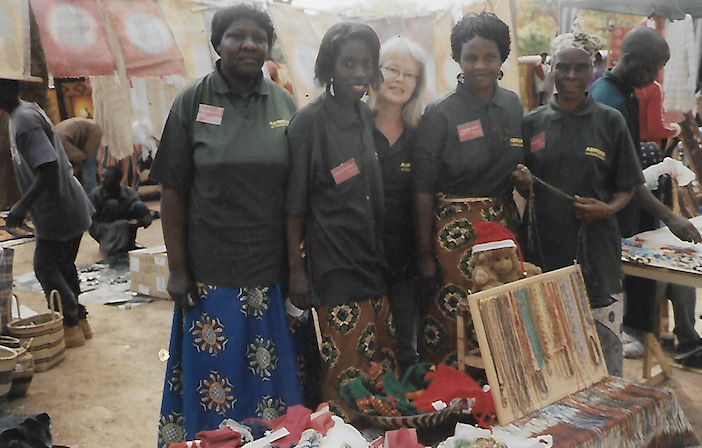
Founders of AWA
Abwenzi Women Association (AWA), a community-based organization (CBO), has been a driving force in Zambia since its establishment in 2005. AWA operates as a non-profit and non-partisan entity. The organization’s mission is to create sustainable livelihoods by promoting self-development, advocating for human rights, and conducting health, education, and agricultural awareness campaigns in Zambia’s most vulnerable communities.
AWA primarily operates in the high-density urban areas of Lusaka and rural regions of the Eastern Province, where poverty and illiteracy are rampant. The association plays a pivotal role in uplifting women and youth, offering practical training and advocacy aimed at addressing these societal challenges.
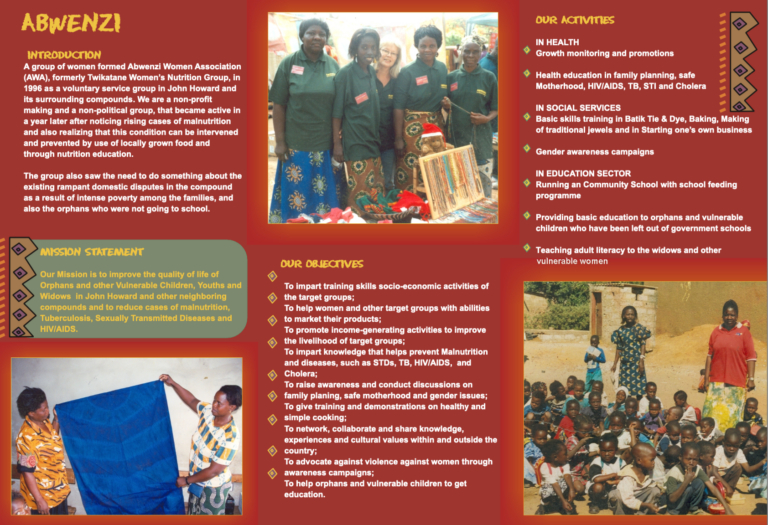
AWA's Brochure
International Gender Awareness and Rights Promotion
AWA has taken part in various international initiatives aimed at promoting gender equality and women’s rights. One such project was organized by KEPA-Zambia, where AWA participated in gender awareness workshops and women’s rights advocacy campaigns. These efforts have enhanced AWA’s capacity to advocate for gender equity and human rights at the local level.
Furthermore, KEPA-Zambia partnered with AWA in youth exchange programs that included Finland and Sweden. As part of this exchange, AWA hosted six international volunteers who stayed for three months, providing a unique opportunity for cultural exchange and shared learning. These collaborations have broadened AWA’s network, allowing the organization to connect with global partners and bring new insights to its projects.
Other International Collaborations
Over the years, AWA has worked with several international organizations on projects that benefit orphans, vulnerable children (OVCs), and marginalized communities. Key partnerships include:
World Vision International: Provided material support for orphans and vulnerable children.
World Food Programme (WFP): Supported food-for-education programs for OVCs.
International Drug Enforcement Agency: Raised awareness about drug abuse among youth.
AfriCare Rapids: Assisted in youth income-generating activities.
Genbrug Til Syd (GTS-Denmark): Supplied material support for schools, clinics, and community-wide projects targeting youth.
These partnerships have significantly bolstered AWA’s capacity to serve its communities, providing essential resources and advocacy support.
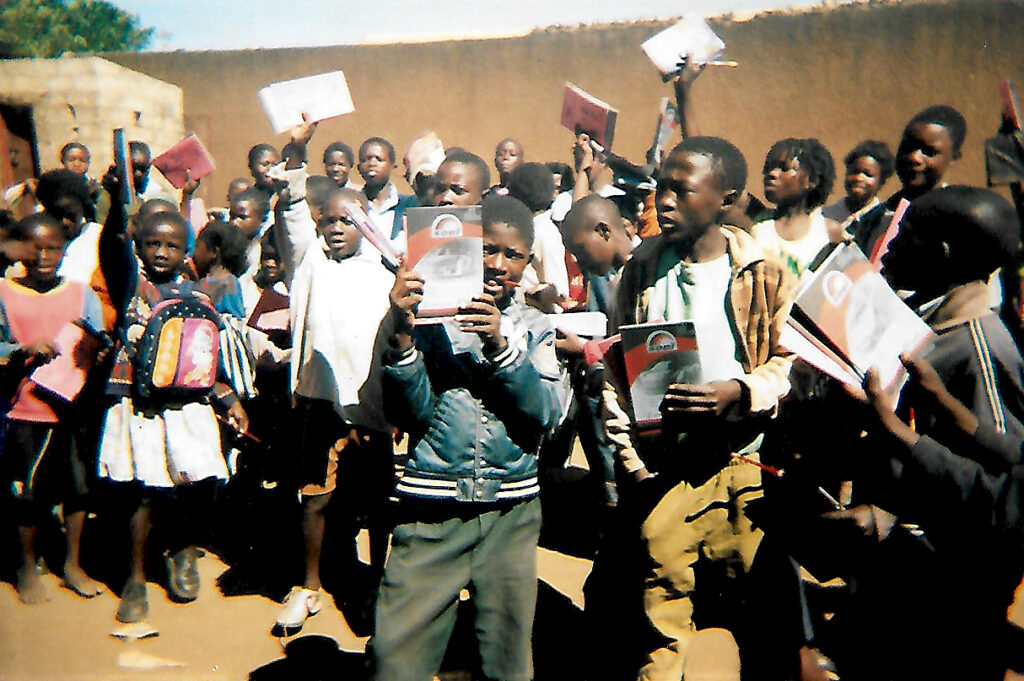
Donated Books
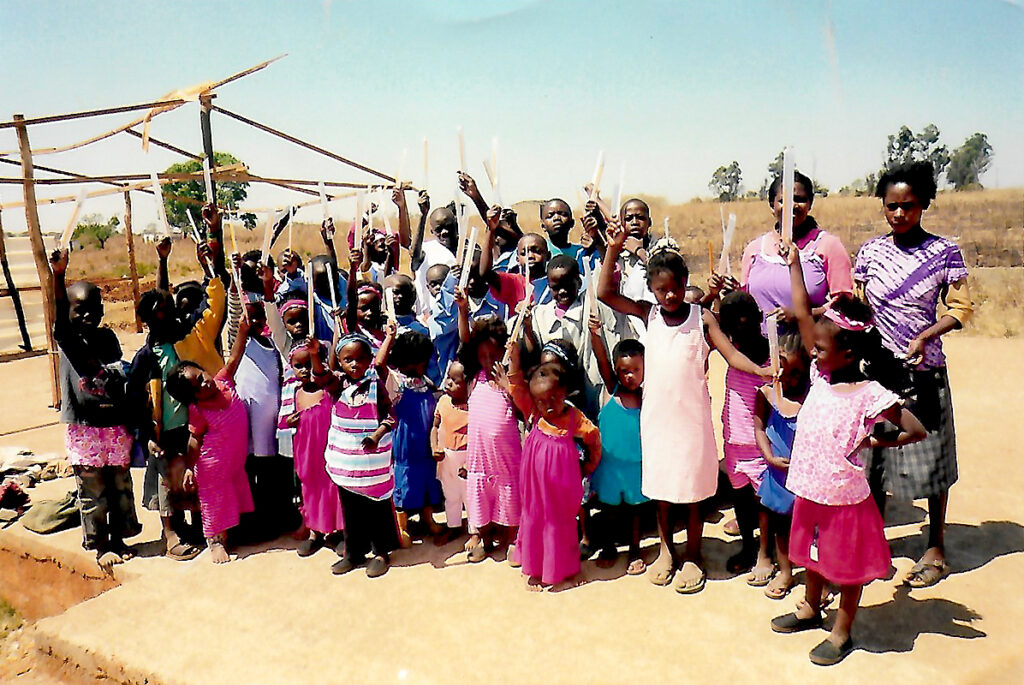
Donated Clothes
Enhancing AWA’s Capacity through International Projects
The partnership between AWA and AFF is built on a unique foundation, as some of the founding members of AWA in Zambia also played a pivotal role in establishing AFF in Denmark. This mutual collaboration has fostered a deep-rooted understanding and shared vision between the two organizations, ensuring alignment in goals and values. This connection enables a seamless exchange of resources, knowledge, and support, which strengthens their joint efforts to empower women and youth in Zambia.
The partnership is expected to bring tremendous value to AWA by improving its project management capabilities, expanding its network, and boosting its visibility both locally and internationally. Successfully managing international projects will enhance AWA’s credibility, opening doors for new funding opportunities and collaborations.
Through this collaboration, AWA will enhance its ability to implement effective projects, engage with stakeholders, and deliver sustainable impact to its communities. As AWA continues to grow, this partnership is poised to significantly increase its reach and influence, positioning the organization as a key player in Zambia’s development sector.
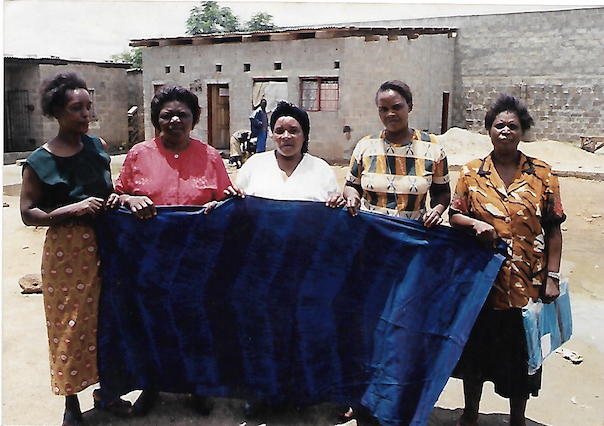
Women’s Empowerment Activity with a Tie-Dye Workshop
AWA’s Path Forward: Learning and Growth
As a CBO, AWA is continually learning and evolving. This will allow AWA to broaden its reach, attract more beneficiaries, and amplify its impact on local and international communities. The long-standing partnership between AWA and FUN-AFF, which dates back to 2019, will continue to serve as the cornerstone for this transformation. Their shared commitment to promoting human rights, youth empowerment, and sustainable development will ensure that both organizations continue to drive meaningful change for vulnerable populations